Background
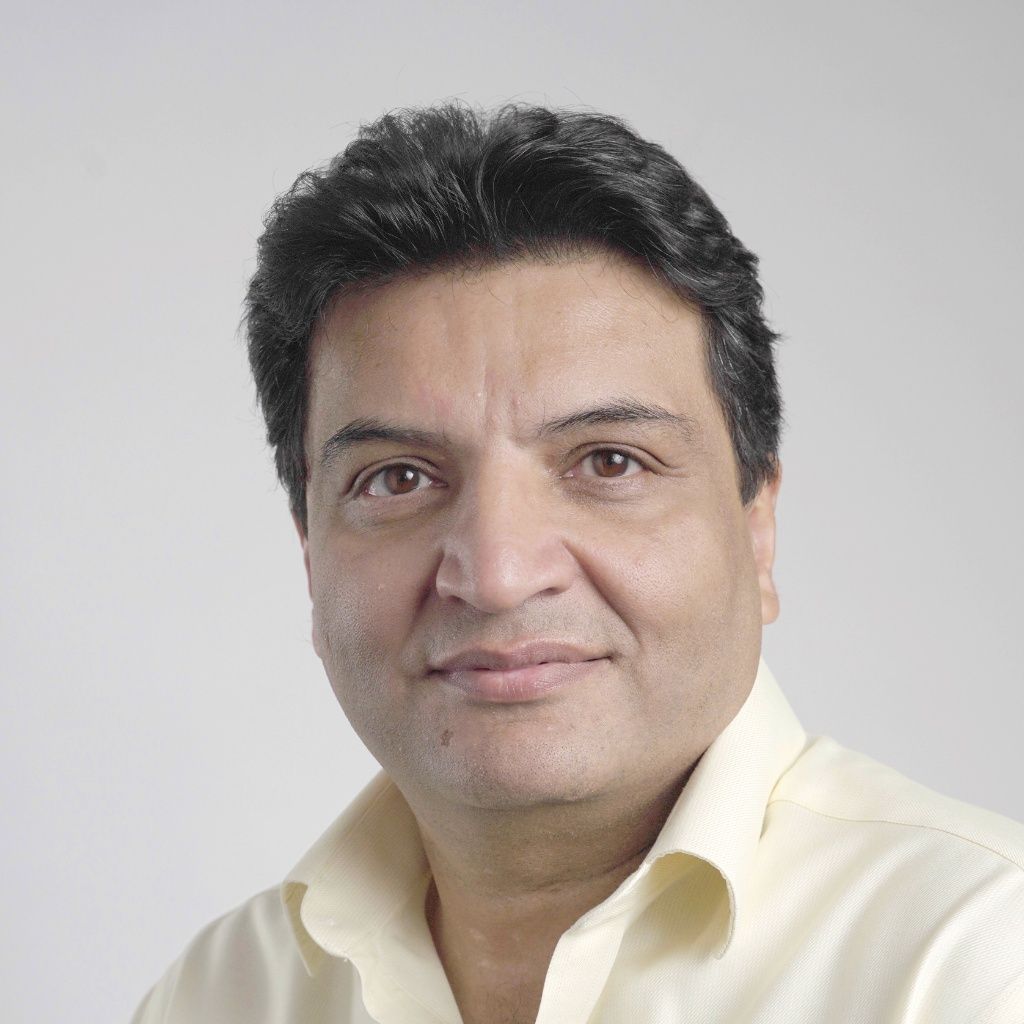
Atul Setia has spent over thirty years at the highest levels of institutional finance and entrepreneurial building, operating across both the UK and India. Every institution he has been part of has been a leader in its field, and he combines a depth of institutional experience that very few possess with a proven ability to build and scale businesses from scratch.
As a Partner at Altima Partners — at the time Europe's third-largest hedge fund — he invested and managed approximately $1 billion across both private equity and listed equities, all focused on India. He travelled to the country approximately once a month over a five-year period, building the deep, first-hand market knowledge that this scale of investment demands. He also conceived, structured, and launched a dedicated India fund within the Altima platform, personally leading the legal structuring, documentation, and tax jurisdiction analysis. He was involved in fundraising alongside some of the world's most sophisticated institutional investors, including the World Bank, Blackstone, Lombard Odier, and QIA (the Qatar Investment Authority).
Beyond his own fund, he was a key point of contact for Altima's largest global investors on the firm's substantial India portfolio allocation. The fund had six investors with over $100 million each committed to the platform, and he was regularly engaged in direct dialogue with these institutions on India-related performance, strategy, and outlook. This placed him at the centre of investor relations at the most senior level, with some of the most demanding allocators of capital in the world.
Prior to Altima, he was an investment banker at Deutsche Bank in London, in the TMT (Technology, Media & Telecommunications) group, during the most transformative period in that sector's history — the late 1990s and early 2000s. At Deutsche Bank, he advised on over $200 billion of transactions — privatisations, mergers, acquisitions, sales, and capital raisings — spanning an unusually broad geographic range including the UK, Germany, Latin America, the Caribbean, South Africa, and Eastern Europe. This was not a narrow sector desk role but a genuinely global practice, advising governments and major corporates on some of the most complex and consequential transactions of the era.
These institutional heavyweight roles were built on rigorous foundations. He qualified as a chartered accountant with Touche Ross, now Deloitte — one of the world's pre-eminent professional services firms — giving him the deep analytical and financial discipline that has underpinned every subsequent role. He served as finance director of a group of companies, gaining hands-on operational and financial management experience. And he completed the Executive MBA programme at London Business School, one of the world's leading business schools, adding a strategic and analytical framework to his already deep financial foundations.
Throughout this period, he also took on significant governance roles. He served on the board of a $500 million Indian real estate private equity fund and on the board of The Indian Film Company, which was listed on AIM (part of the London Stock Exchange). The Indian Film Company produced six major Bollywood blockbusters in succession during its heyday and was subsequently acquired by Viacom18, which is now a subsidiary of Reliance Industries following an $8.5 billion merger with Disney's Indian operations in 2024. He is also a Trustee of Saving Faces — The Facial Surgery Research Foundation, the only charity in the UK solely dedicated to the worldwide reduction of facial injuries and diseases through research.
But Atul Setia is not only an institutional finance professional — he is a proven entrepreneur and business builder.
He founded a London-based post-production and visual effects business whose credits included BBC's Sherlock, starring Benedict Cumberbatch, and the visual effects for League of Gods, one of the most ambitious Chinese blockbusters of 2016. The business also established a joint venture with Red Chillies, the VFX and production company owned by Shah Rukh Khan — bringing together London's post-production expertise with India's rapidly growing visual effects industry.
He founded Cubedots, an interactive architectural visualisation and proptech business headquartered in Indore, India, with approximately 80 employees and a client roster of best-in-class developers across multiple international markets including Qatari Diar, DAMAC, Sobha, Palm Hills, Al Ramz, Hiranandani, Raheja, Rustomjee, Tekfen, and Leptos. Cubedots' Turkish subsidiary became one of the largest sellers of international off-plan real estate to foreign investors within two years from a standing start, generating $15 million in annual revenue and over $2 million in EBITDA on a fully bootstrapped basis, before a managed exit driven by Turkish macroeconomic conditions. The business now serves clients across India, Saudi Arabia, and other international markets, and is expanding into BIM and AI-enabled real estate tools.
Today, his active interests also span an AI venture studio, purpose-built student housing in India, an Indian sauces business in partnership with a Michelin-starred chef, and animation and film funding.
A thread runs through the entire career: operating at the highest level within each field, building bridges between the UK and India, and consistently earning the trust of the most distinguished names in their respective domains — whether that is the World Bank and Blackstone in institutional investment, Deutsche Bank in corporate finance, Qatari Diar and Hiranandani in real estate, The Indian Film Company and Viacom18 in Bollywood, Benedict Cumberbatch's Sherlock and Shah Rukh Khan's Red Chillies in entertainment, or a Michelin-starred chef in the culinary world. And critically, he has demonstrated a proven ability not just to advise and invest but to build and operate businesses directly — taking Cubedots from inception to international scale, and its Turkish subsidiary from zero to $15 million in revenue within two years.